
 0
0
 0
0
Farmhouse sinks, also known as apron-front sinks, have become one of the most sought-after upgrades in both modern and traditional kitchens. Their deep basin, classic exposed front, and everyday practicality make them a favorite choice for homeowners looking to combine style with function.
However, before making the upgrade, one important question often comes up:
How to install a farmhouse sink in an existing cabinet?
The good news is that installing a farmhouse sink in an existing cabinet is absolutely possible, but it does require careful planning, precise cabinet modifications, and proper structural support to handle the sink’s weight. This guide is designed to walk you through how to install a farmhouse sink in an existing cabinet, even if your kitchen cabinets weren’t originally built for an apron-front design.
By the end of this article, you’ll learn:
- Whether your existing cabinet is suitable for a farmhouse sink
- The tools and materials required for installation
- A clear, step-by-step installation process
- Common mistakes to avoid during installation
- Real-world considerations, along with pros, cons, and frequently asked questions
This comprehensive guide will help you make confident decisions and achieve a successful farmhouse sink installation without unnecessary setbacks.
What Is a Farmhouse (Apron-Front) Sink?
A farmhouse sink is defined by its exposed front panel (apron) that extends past the cabinet face. Unlike drop-in or undermount sinks, farmhouse sinks:
- Are deeper (typically 8–10 inches)
- Can be made from fireclay, cast iron, stainless steel, or composite
- Require front cabinet modification
- Often need extra structural support due to weight
Because of these factors, installing one into an existing cabinet is more complex than a standard sink replacement.
Can You Install a Farmhouse Sink in an Existing Cabinet?
Yes, you can, but not without modifications.
Key Requirements
Before you begin, confirm the following:
- Cabinet width is at least 33 inches (36 inches is ideal)
- Cabinet material is solid wood or plywood (not weak particle board)
- Plumbing allows for vertical and depth adjustments
- Countertops can be removed or adjusted if needed
If these conditions are met, you can safely proceed with installing an apron sink in an existing cabinet.
Tools & Materials You’ll Need
Tools
- Measuring tape
- Circular saw or jigsaw
- Drill and drill bits
- Level
- Clamps
- Screwdriver
- Safety goggles & gloves
Materials
- Farmhouse sink
- 2×4 lumber or plywood for the support frame
- Wood screws
- Silicone sealant (waterproof)
- Shims
- Sink strainer & drain kit
Farmhouse Sink Installation Requirements Checklist
| Installation Aspect | What’s Required | Why It Matters |
| Minimum Cabinet Width | 33–36 inches | Ensures the sink fits properly without structural stress |
| Cabinet Material | Solid wood or plywood | Prevents sagging under heavy farmhouse sink weight |
| Support Structure | 2×4 or plywood support frame | Farmhouse sinks are heavy and cannot rely on countertops alone |
| Front Cabinet Modification | Face frame cut or removed | Allows the apron front to sit flush with the cabinet |
| Plumbing Adjustments | Lower drain & P-trap reposition | Apron sinks sit deeper than standard sinks |
| Countertop Compatibility | Stone, wood, or laminate (sealed) | Ensures proper sealing and long-term durability |
| Sink Weight Capacity | 100–200+ lbs support | Fireclay and cast-iron sinks require extra reinforcement |
| Sealant Used | Waterproof silicone | Prevents water damage and cabinet rot |
Step-by-Step Guide: How to Install a Farmhouse Sink in an Existing Cabinet
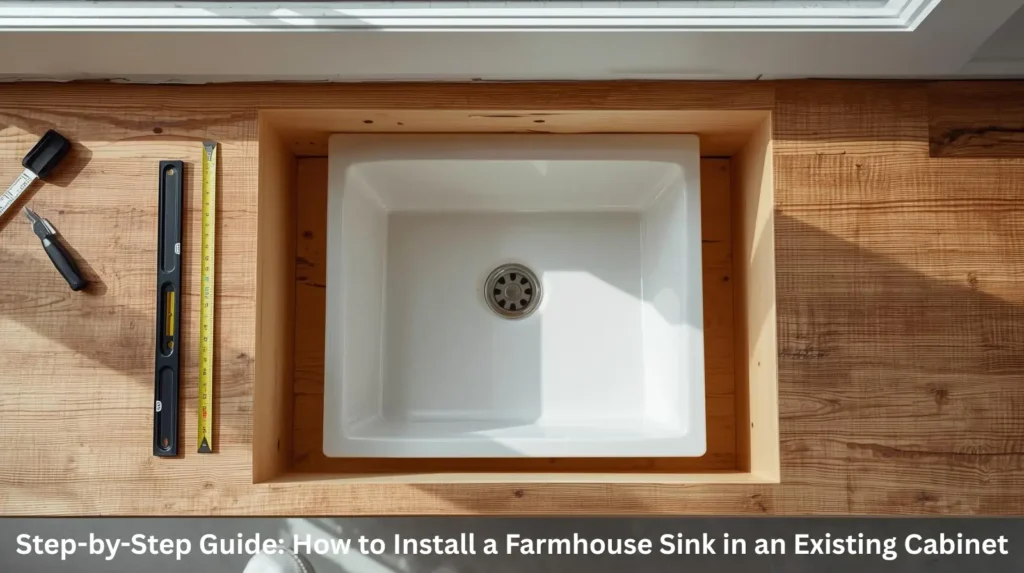
Step 1: Measure Everything (Critical Step)
Measure three things carefully:
- Sink dimensions (width, depth, height)
- Cabinet interior dimensions
- Countertop thickness
Even a ¼-inch mistake can cause misalignment with countertops.
Pro tip: Always follow the sink manufacturer’s specification sheet.
Step 2: Remove the Existing Sink & Countertop (If Needed)
- Turn off the water supply
- Disconnect plumbing and garbage disposal
- Remove the old sink
- Detach countertop if required (many farmhouse sinks sit lower)
Some countertops (like quartz or granite) may require professional handling.
Step 3: Modify the Cabinet Front
This is where most homeowners hesitate.
To install an apron sink in an existing cabinet:
- Remove the cabinet’s front rail
- Cut the cabinet face to match the apron height
- Ensure the apron sits flush or slightly proud of the cabinet face
Use painter’s tape as a guide before cutting.
Step 4: Build Internal Support (Very Important)
Farmhouse sinks are heavy:
- Fireclay sinks: 100–150 lbs
- Cast iron sinks: 200+ lbs
Build a support frame inside the cabinet using 2×4 lumber or thick plywood:
- The frame should sit on the cabinet base
- Sink weight must NOT rely on countertops alone
- Use a level to ensure perfect alignment
This step is non-negotiable for long-term durability.
Step 5: Dry Fit the Sink
Before sealing:
- Place the sink on the support frame
- Check for level (front-to-back and side-to-side)
- Confirm apron alignment with the cabinet face
- Adjust with shims if necessary
Only move forward once everything fits perfectly.
Step 6: Install Plumbing Adjustments
Farmhouse sinks sit deeper, so you may need to:
- Lower the drain outlet
- Adjust P-trap height
- Modify garbage disposal alignment
If plumbing changes feel complex, consult a licensed plumber.
For manufacturer plumbing diagrams, you can reference sink installation manuals (external reference, nofollow).
Step 7: Secure the Sink Permanently
- Apply silicone sealant along support rails
- Set the sink in place
- Allow sealant to cure (usually 24 hours)
Avoid over-tightening clips if included.
Step 8: Reinstall Countertop
- Ensure the countertop sits cleanly against the sink
- Seal all joints with waterproof silicone
- Reinstall the faucet and accessories
For a faster method, you can also review this internal guide: 👉 How to Install a Farmhouse Sink Easily in Just a Few Hours
Real-Life Example: DIY Kitchen Upgrade with Farmhouse Sink
A homeowner with a 20-year-old cabinet replaced a standard double-bowl sink with a fireclay farmhouse (apron-front) sink, transforming the kitchen’s look and functionality. To ensure success, they reinforced the base cabinet with plywood supports, trimmed the face frame to fit the apron front, and made the plumbing adjustments needed for the deeper basin.
Thanks to diligent planning and careful DIY work, the entire project was completed over a single weekend, saving nearly $1,200 in labor costs compared to hiring professionals. This saving aligns with broader trends in kitchen renovations, where homeowners choose DIY approaches to reduce installation costs, especially for farmhouse sinks that can be more expensive to install due to cabinet modification needs.
Recent installation guides confirm that farmhouse sinks require custom cabinet adjustments and additional bearing support because of their size and weight, much more so than standard drop-in or undermount sinks.
Many homeowners also report enhanced kitchen usability after installation: the deeper basin and apron design not only improves ergonomics but also accommodates large cookware more easily—a key reason this style continues to grow in popularity in 2025.
Common Mistakes to Avoid When Installing a Farmhouse Sink
Installing a farmhouse or apron-front sink in an existing cabinet isn’t as simple as swapping out a standard sink. Even experienced DIYers can run into issues if they overlook key details. Below are the most common mistakes, updated with the latest installation insights and recommendations:
Skipping Structural Support
Farmhouse sinks, especially fireclay and cast-iron models, are heavy (often over 100–200 lbs) and can easily damage cabinets that aren’t reinforced properly. Failing to add strong internal framing can lead to sagging, misalignment, and long-term cabinet damage. Manufacturers and installation guides strongly emphasize building a solid support frame inside the cabinet to bear the sink’s full weight, rather than relying on the countertop or cabinet sides alone.
Cutting Cabinet Face Before Measuring Apron Height
Every apron-front sink has a unique front height and profile. If you cut the cabinet face before measuring the actual sink apron dimensions, you risk misalignment or gaps between the sink and cabinet. Professional installation guides advise using the sink itself as the template for cabinet cutouts to ensure a precise fit.
Relying on Countertops to Hold Sink Weight
Unlike drop-in models, farmhouse sinks cannot be supported by countertops alone. Some installation instructions explicitly warn that hard surfaces like stone or butcher block may need custom cutting, and structural support must come from within the base cabinet, not the counter.
Forgetting Plumbing Clearance
Farmhouse sinks are deeper and positioned differently compared with standard models. This often means drain lines, P-traps, and garbage disposals must be lowered or extended to accommodate the new depth and position. Overlooking this leads to drainage issues or even leaks once the sink is installed.
Not Checking Manufacturer Specs and Templates
Some manufacturers do not provide a cutout template and expect installers to use the sink itself as the carving guide. Ignoring this detail or relying on generic templates, can lead to imprecise cuts, uneven reveals, and poor sealing. Always review the specific installation instructions that come with your sink model before starting work.
Choosing the Wrong Sink for Cabinet Type
Not all apron-front sinks are suitable for every countertop or cabinet configuration. For example, undermount apron sinks often require a solid stone counter, while farmhouse sinks with top-mount features behave differently. Picking the wrong type can force costly alterations or even make installation impossible.
Improper Sealant Application
Water damage is a leading cause of cabinet decay. Using inadequate sealant or rushing through the sealing process around the sink and countertop joints invites water penetration, mold, and future wood rot. Proper waterproof silicone and careful application are crucial for long-term performance.
Ignoring Local Codes & Building Standards
Some areas have specific plumbing or structural requirements for kitchen remodels. Failing to check local codes before modifying cabinetry or plumbing can result in failed inspections or costly rework. When in doubt, consult a licensed plumber or contractor.
Pros & Cons of Installing a Farmhouse Sink in an Existing Cabinet
Pros
- Adds resale value
- Deeper basin for large cookware
- Timeless, high-end appearance
- Works with modern and traditional kitchens
Cons
- Cabinet modification required
- Heavier than standard sinks
- Installation takes longer
- Higher upfront cost
FAQs: How to Install an Apron Sink in an Existing Cabinet
Yes, as long as the cabinet is wide and strong enough.
DIY is possible, but plumbing and countertop work may require pros.
36-inch cabinets are ideal; 33-inch is the minimum.
Yes, but extra sealing and reinforcement are required.
DIY: 1–2 days
Professional: 4–6 hours
Expert Tips for Long-Term Success
- Choose stainless steel for a lighter weight
- Always overbuild support framing
- Use waterproof plywood
- Seal all wood edges to prevent moisture damage
Conclusion
Installing a farmhouse sink in an existing cabinet is absolutely achievable with the right preparation and tools. While it requires cabinet modification and added support, the final result is a functional, beautiful centerpiece that transforms your kitchen.
If you follow this guide carefully, you’ll avoid costly mistakes and enjoy a professional-quality upgrade, without replacing your entire kitchen.