
 0
0
 0
0
Living in a small house doesn’t mean you have to feel cramped, cluttered, or uncomfortable. In fact, many small homes feel tight not because of their size, but because of poor layout, lighting, furniture choices, and visual clutter. The good news? You don’t need expensive renovations or structural changes to fix that.
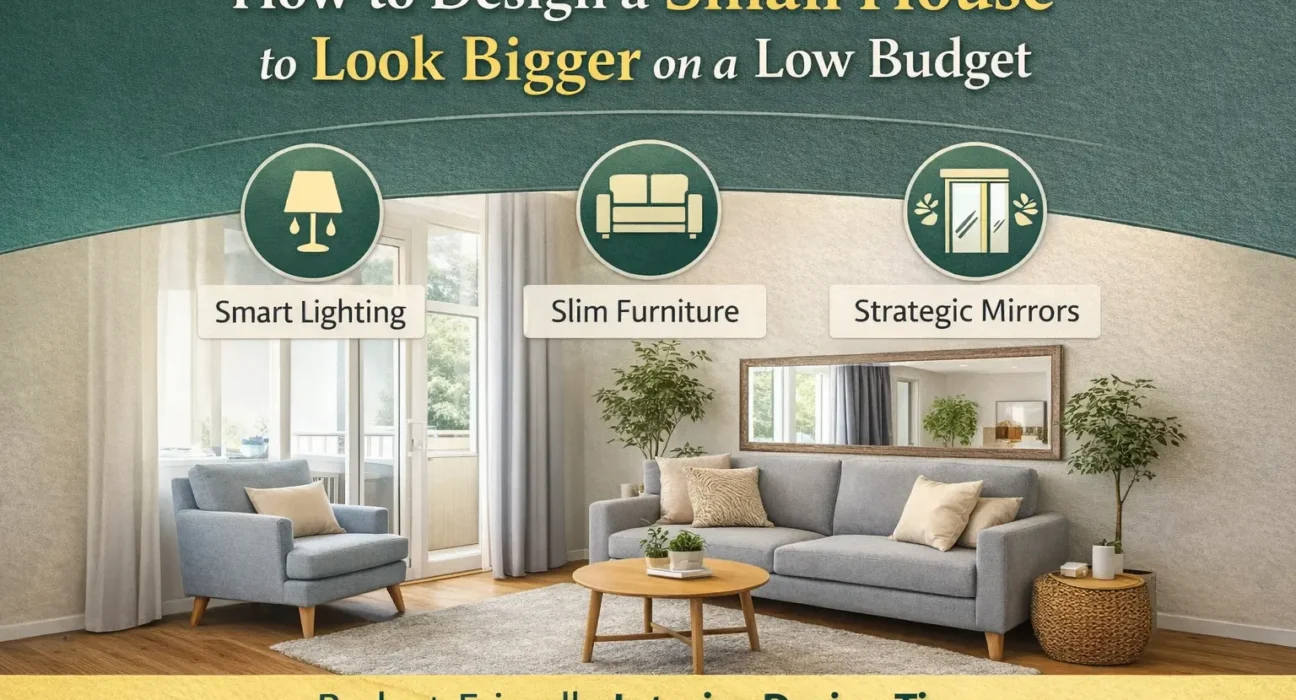
If you’re wondering how to design a small house to look bigger on a low budget, this guide is exactly what you need. With smart design choices, simple rearrangements, and a few low-cost upgrades, you can dramatically change how spacious your home feels, without breaking the bank.
This article goes beyond generic tips. You’ll learn why small homes feel smaller, what actually works, and how to apply room-by-room solutions that interior designers and home stagers use, adapted for real homes and real budgets.
Why Small Houses Feel Smaller Than They Are
Before fixing the problem, it’s important to understand why small homes often feel cramped.
Poor Layout and Furniture Placement
One of the biggest mistakes in small houses is oversized or poorly placed furniture. Large sofas, bulky coffee tables, and crowded seating arrangements block pathways and interrupt visual flow. When the eye can’t travel freely across a room, the space immediately feels smaller.
Dark Colors and Inadequate Lighting
Dark walls, heavy curtains, and limited lighting absorb light instead of reflecting it. This creates shadows and visual weight, making rooms feel closed-in, even during the day.
Too Much Visual Clutter
Small spaces magnify clutter. Too many decorative items, mismatched furniture, or open storage filled with random items can overwhelm the eye and make the room feel chaotic rather than open.
Understanding these issues helps you address them strategically, without incurring unnecessary expenses.
Core Design Principles That Make a Small House Look Bigger
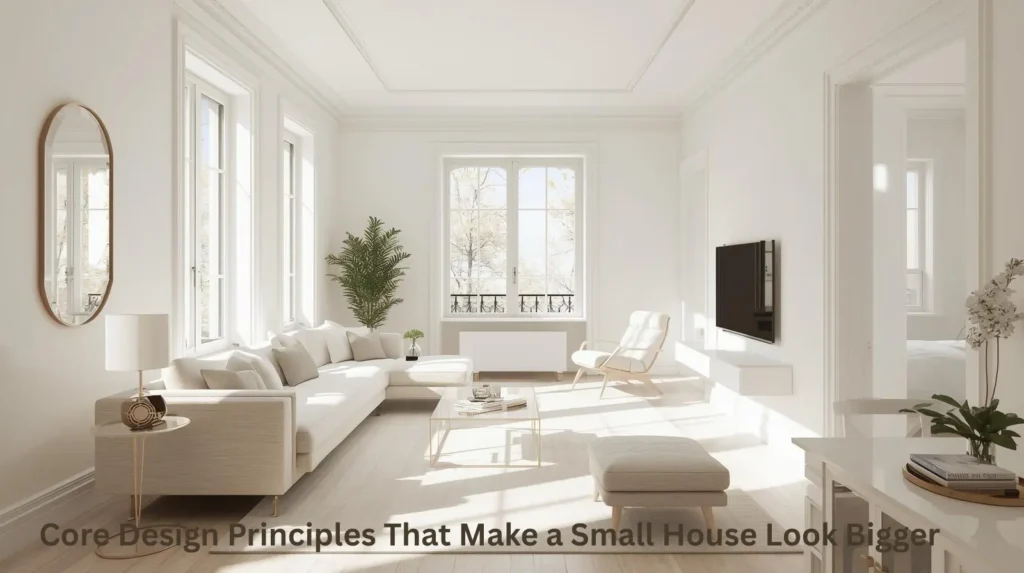
These foundational principles are evident in top interior design and home staging strategies, and they have been proven to work.
Maximize Natural Light (Free & Powerful)
Natural light is one of the most effective ways to make a small house look bigger.
- Use sheer or light-colored curtains instead of heavy drapes
- Keep windows unobstructed by furniture
- Clean windows regularly to maximize light entry
The more daylight you allow in, the more open and breathable your space feels.
Use Light and Neutral Colors Strategically
Light colors reflect light, which visually expands a space.
Best low-budget color choices for small homes:
- White
- Off-white
- Light beige
- Soft gray
- Pastels
Paint walls, ceilings, and even large furniture pieces in similar tones to reduce visual breaks and create continuity.
Create Clear Visual Sightlines
When your eye can move from one end of the room to the other without interruption, the space feels larger.
- Avoid tall furniture near entrances
- Keep center pathways clear
- Use low-profile furniture
This principle alone can instantly improve how spacious your home feels.
Low-Budget Interior Design Tricks That Actually Work
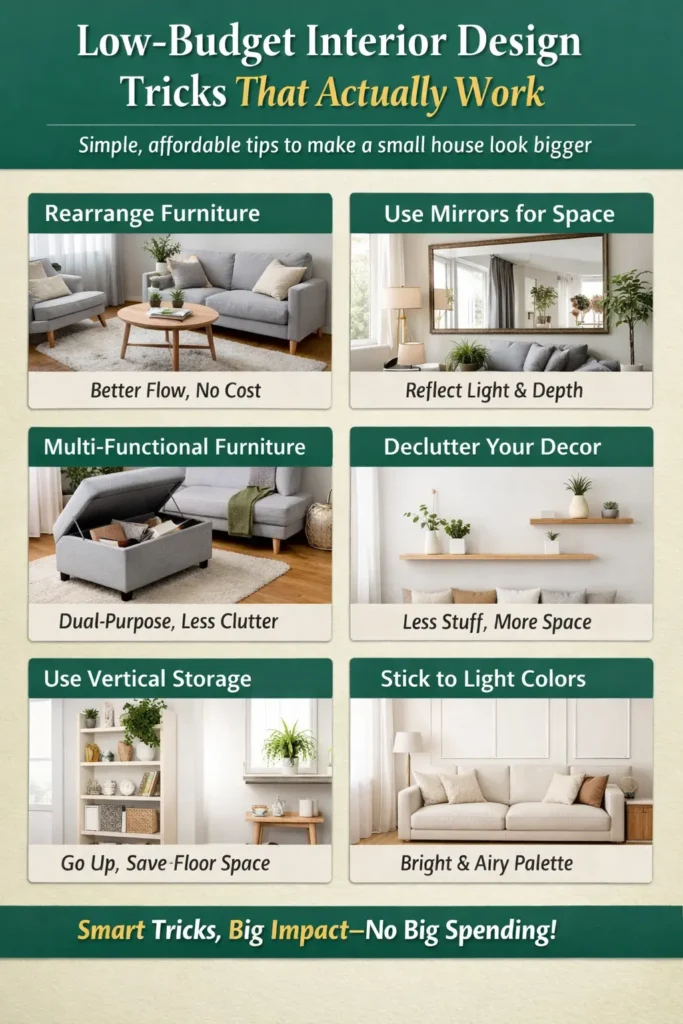
You don’t need to buy new furniture or remodel walls. These budget-friendly tricks deliver high visual impact.
Rearrange Furniture (₹0 Cost)
Rearranging furniture is the cheapest and most effective upgrade.
- Float furniture slightly away from walls to improve flow
- Avoid pushing everything against the walls; this often makes rooms feel boxed in
- Group furniture purposefully instead of scattering pieces
Try multiple layouts before settling on one.
Use Mirrors to Visually Expand Space
Mirrors create the illusion of depth and reflect both light and space.
Best placements:
- Opposite windows
- Behind light sources
- At the end of narrow hallways
Avoid cluttered reflections; mirrors should reflect open, bright areas.
Choose Multi-Functional Furniture
Multi-purpose furniture reduces clutter and maximizes function.
Examples:
- Storage ottomans
- Sofa beds
- Foldable dining tables
- Wall-mounted desks
Each piece should serve at least two purposes whenever possible.
Designing a small house to look bigger doesn’t just save space; it can also support a more sustainable lifestyle. Choosing fewer, multifunctional pieces and avoiding unnecessary decor naturally reduces waste. If you’re interested in combining smart design with sustainability, explore our guide on how to achieve a stylish yet eco-friendly interior design, which shares practical tips for creating a beautiful home with minimal environmental impact.
Room-by-Room Tips to Make a Small House Look Bigger
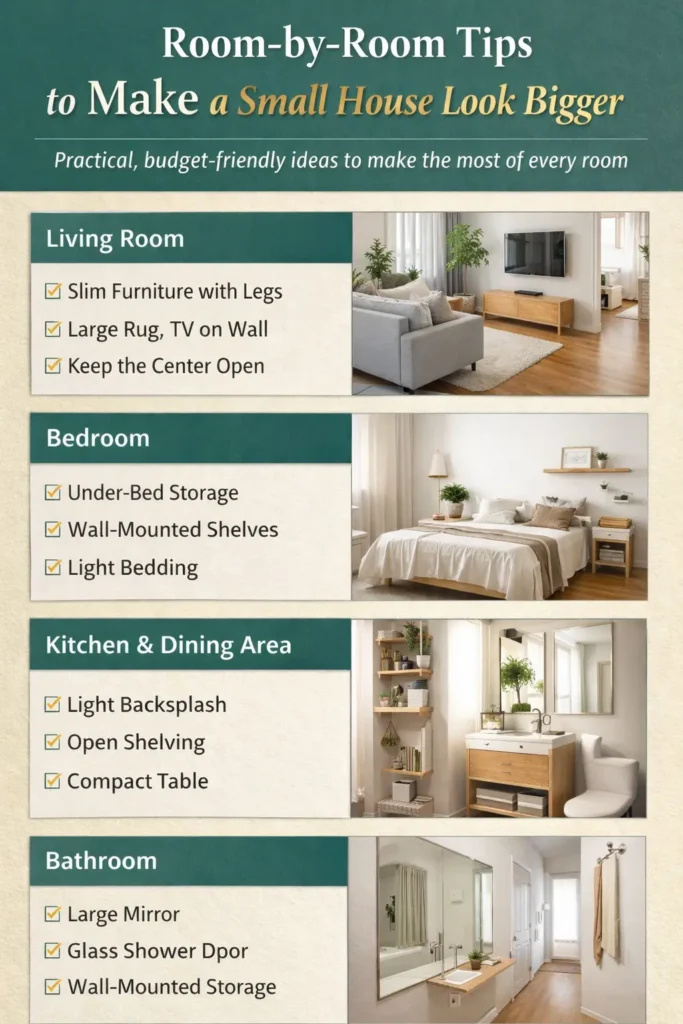
Living Room Design on a Budget
The living room often determines how spacious your entire home feels.
- Choose slim-profile sofas with visible legs
- Use a single large rug instead of multiple small ones
- Mount the TV on the wall instead of using a bulky unit
- Use vertical shelves instead of wide cabinets
Keeping the floor visible creates an immediate sense of openness.
Small Bedroom Design Ideas
Bedrooms can easily feel cramped, but small changes make a big difference.
- Use under-bed storage instead of bulky wardrobes
- Choose light bedding and minimal headboards
- Install wall-mounted bedside tables
- Avoid overcrowding with decorative pillows
A calm, uncluttered bedroom always feels larger.
Kitchen & Dining Area Solutions
Small kitchens benefit greatly from visual simplicity.
- Replace upper cabinets with open shelving
- Use light-colored backsplashes
- Choose compact dining furniture
- Keep countertops clear
Even one open shelf can make a kitchen feel less boxed-in.
Bathroom Space-Enhancing Tricks
Bathrooms often feel the smallest due to storage overload.
- Install a large mirror
- Use wall-mounted storage
- Keep tile color consistent on walls and floors
- Replace bulky cabinets with open or recessed shelving
These changes create visual continuity and openness.
Budget-Friendly Color, Lighting & Décor Choices
Best Paint Colors for Small Houses
- Light neutral walls + white ceiling = taller feel
- Painting the ceiling the same color as the walls removes visual boundaries
- Avoid high-contrast accent walls in tight spaces
Lighting That Makes Small Spaces Feel Bigger
Layer your lighting instead of relying on a single ceiling light.
- Floor lamps
- Wall sconces
- Table lamps
Even inexpensive lighting instantly adds depth.
Décor Rules for Small Homes
- Fewer, larger décor pieces instead of many small items
- Vertical wall art draws the eye upward
- Stick to a limited color palette
Intentional décor makes a space feel curated, not crowded.
Small House Design Checklist (Quick Reference)
| Design Area | Budget-Friendly Action | Visual Impact |
| Furniture | Use slim, multifunctional pieces | High |
| Lighting | Add floor & wall lights | High |
| Mirrors | Place opposite windows | High |
| Colors | Light walls & ceilings | Medium–High |
| Storage | Vertical & hidden storage | High |
| Décor | Minimal, intentional items | Medium |
Common Design Mistakes That Make Small Houses Look Smaller
Oversized Furniture
Large furniture dominates small rooms and restricts movement.
Too Many Colors
Multiple colors break visual continuity and shrink spaces visually.
Blocking Natural Light
Heavy curtains or furniture near windows reduces openness.
Common Design Mistakes That Make Small Houses Look Smaller
Even well-intentioned decorating choices can unintentionally make a small house feel cramped. Many of these mistakes are still common in modern interiors, especially when homeowners try to replicate designs meant for larger spaces. Avoiding the following errors can instantly improve openness, comfort, and visual flow, often without spending any money.
Oversized Furniture
Large sofas, bulky cabinets, and oversized beds dominate small rooms and restrict movement. When furniture takes up too much visual and physical space, it disrupts flow and makes the room feel crowded.
What works better (latest trend):
- Choose slim-profile furniture with exposed legs
- Opt for scaled-down or apartment-size pieces
- Prioritize furniture with clean lines over bulky designs
Modern interior trends strongly favor lighter, visually elevated furniture for compact homes.
Too Many Colors and Patterns
Using multiple bold colors or patterns in a small house breaks visual continuity and makes spaces feel busy and segmented. This visual fragmentation causes rooms to feel smaller than they actually are.
Better approach:
- Stick to a limited color palette (2–3 main tones)
- Use texture instead of color for visual interest
- Extend similar tones across adjacent rooms for flow
Current design guidelines emphasize cohesive color schemes to create the illusion of more space.
Blocking Natural Light
Heavy curtains, dark blinds, or furniture placed directly in front of windows prevent natural light from spreading through the room. Poor lighting is one of the fastest ways to shrink a space visually.
Modern fix:
- Replace heavy curtains with sheer or light fabrics
- Keep window areas clear of large furniture
- Use mirrors to bounce natural light deeper into rooms
Designers today prioritize daylight optimization as a key strategy for small homes.
Ignoring Vertical Space
Many small homes underuse walls, leaving valuable storage and design potential unused. When everything is placed at floor level, rooms feel compressed.
Smarter solutions:
- Install wall-mounted shelves or cabinets
- Use tall, narrow bookcases instead of wide ones
- Hang artwork or curtains higher to draw the eye upward
Vertical design is a leading trend in small-space interiors because it increases functionality without reducing floor space.
Overdecorating and Visual Clutter
Too many decorative items, open shelves filled with objects, or excessive wall art can overwhelm a small space and make it feel chaotic.
Current best practice:
- Use fewer but larger décor pieces
- Keep surfaces mostly clear
- Rotate décor seasonally instead of displaying everything at once
Minimal, intentional styling is now considered one of the most effective ways to make small houses look bigger.
Why Avoiding These Mistakes Works
Correcting these common design mistakes:
- Improves movement and functionality
- Enhances natural light and visual flow
- Makes rooms feel calmer and more open
- Creates instant improvement without renovation
Often, what you remove matters more than what you add in a small house.
Ignoring Vertical Space
Walls are valuable real estate, and use them wisely.
Avoiding these mistakes often improves a space instantly.
How to Make a Small House Look Bigger Without Renovation
This is where many competitors stop, but here’s the full truth:
You can dramatically improve space perception without:
- Breaking walls
- Changing layouts
- Buying expensive furniture
Focus on:
- Layout
- Lighting
- Color
- Storage
These are renter-friendly and budget-safe changes.
Real-Life Example: Small Home Transformation on a Budget
Before:
- Dark walls
- Bulky sofa
- Cluttered surfaces
- Single ceiling light
After (Low Budget):
- Light neutral paint
- Sofa repositioned
- Mirror added opposite window
- Floor lamp + table lamp
- Decluttered décor
Result:
The home felt brighter, wider, and more organized, without renovation or expensive purchases.
FAQs: Designing a Small House to Look Bigger
To make a small home look bigger, focus on light colors, good lighting, and smart furniture placement. Use mirrors to reflect light, keep walkways clear, choose multi-functional furniture, and reduce clutter. These low-budget changes improve visual flow and make rooms feel more open without renovation.
The 3-4-5 rule in decoration helps maintain balance in a room by limiting visual elements. It suggests using 3 colors, 4 main furniture pieces, and 5 decorative accents. This prevents overcrowding and keeps small spaces visually calm and organized.
Light and neutral colors make a small house look bigger. Shades like white, off-white, light beige, soft gray, and pastel tones reflect light and create a sense of openness. Painting walls and ceilings in similar light tones also reduces visual boundaries and expands the space visually.
The 3-5-7 rule in interior design refers to grouping decorative items in odd numbers (3, 5, or 7) to create visual balance and interest. In small houses, using fewer grouped items helps avoid clutter while still adding personality to the space.
Even small changes with minimal spending can create noticeable results.
Final Thoughts: Small Space, Smart Design
Designing a small house to look bigger on a low budget isn’t about tricks; it’s about intentional design choices. With the right layout, light, colors, and furniture, even the smallest homes can feel open, comfortable, and stylish.
Start with free changes, focus on function, and upgrade gradually. Your home doesn’t need more space; it needs a smarter design.