
 1
1
 0
0
A living room should be more than just a place to sit; it should be a space where energy flows freely, guests feel welcome, and relaxation comes naturally. One of the most effective ways to achieve this is through feng shui living room arrangement, a design philosophy rooted in balance, harmony, and energy flow. Whether you’re decorating a cozy apartment or rearranging furniture in a family room, understanding how to apply feng shui principles can transform your space into a haven of calm and positivity.
In this comprehensive guide, you’ll learn practical furniture placements, energy-boosting décor ideas, common mistakes to avoid, and expert tips that work in modern homes.
What Is Feng Shui and Why Does It Matter for Your Living Room
Feng shui is a traditional Chinese practice that focuses on creating harmony between individuals and their environment. At its core, feng shui is about encouraging positive life force, known as chi, to flow smoothly through your space. When your living room is arranged with intention and balance, it can enhance comfort, communication, relaxation, and even well-being.
Today’s feng shui isn’t about strict superstition; it’s practical, visual, and highly applicable to modern living spaces. Designers and decorators use these principles to improve flow, reduce clutter, and make interiors feel more harmonious. According to experts, a well-arranged living room based on feng shui can change the energy of your entire home.
Core Principles to Follow Before You Rearrange
Before moving furniture, there are a few foundational ideas you need to understand:
Command Position
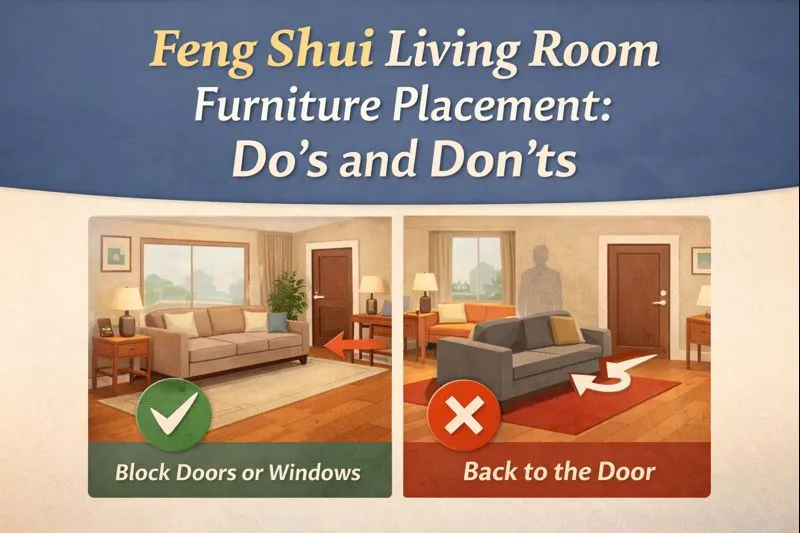
In feng shui, the command position refers to where important furniture—like the sofa—is placed relative to the room’s entrance. Ideally, seating should have a clear view of the door without being in a direct line with it. This position helps people feel grounded and secure.
Unobstructed Flow
Your living room should allow people and chi to move freely throughout the space. Arrange furniture so that walkways are clear and there are no sudden stops in traffic flow. Cluttered pathways disrupt energy and make the room feel tight or stagnant.
Balance Yin & Yang
Balance soft and hard elements to create a sense of harmony. Soft textiles and curves bring relaxing yin energy, while stronger shapes and edges bring yang energy. Combining these creates a balanced space that feels neither dull nor overwhelming.
Furniture Arrangement Tips for Positive Energy and Flow
Here are actionable feng shui furniture arrangements to try in your living room:
Place Your Sofa in a Command Position
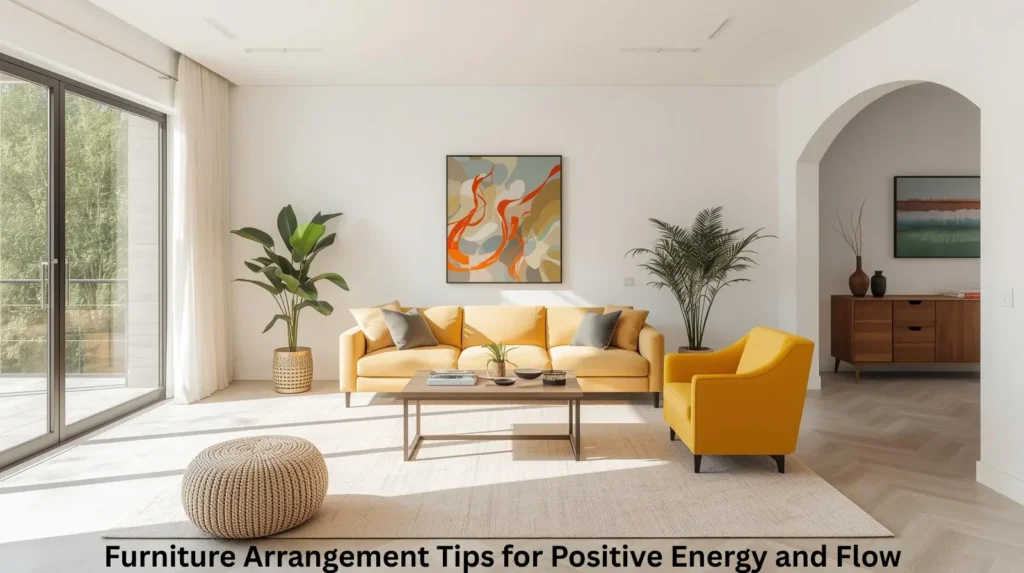
The sofa should ideally face the main entrance or be positioned diagonally so that you can see the door without being directly in line with it. This enhances awareness and security, both physically and energetically.
📌 Pro Tip: Avoid placing the sofa with its back directly against a window. This can make the energy feel unstable.
Arrange Conversation Areas
Group seating to promote interaction without crowding the room. Arrange chairs and sofas so people can see each other easily. A circular or U-shaped layout often works best.
Mind TV and Electronics
While electronics aren’t inherently bad in feng shui, they should not dominate the space or disrupt balance. If your TV is the focal point, counterbalance it with décor and soft elements on the opposite side.
Ensure Clear Traffic Flow
Leave at least two to three feet of clearance for pathways so people can walk comfortably without squeezing between furniture.
Adapt for Small Living Rooms
If your space is compact, float seating slightly away from walls to improve flow and avoid sharp traffic bottlenecks. Choose multifunctional pieces like ottomans that can be used for seating, storage, or surfaces.
If you’re planning a complete design refresh, you may also want to explore our step-by-step guide to feng shui living room arrangement with 15 easy steps that make implementing these principles even simpler. This companion article offers a practical checklist and layout examples for 2025, helping you transform your space with confidence and clarity.
Design Elements That Boost Positive Energy
The right décor choices strongly influence how energy moves through your living room.
Five Key Elements
Feng shui uses five elements, wood, fire, earth, metal, and water, to create balance:
- Wood: plants, wooden furniture
- Fire: candles, warm colors
- Earth: ceramics, neutral hues
- Metal: frames, light fixtures
- Water: mirrors, glass surfaces
Try including one from each category to create a dynamic and balanced environment.
Lighting
Good lighting is essential for uplifting energy. Natural light is ideal, so keep windows unobstructed. At night, combine ambient and task lighting to avoid harsh single-source illumination.
Plants and Greenery
Healthy plants promote vibrant energy and are especially useful in the wood element. Choose plants with rounded leaves for softer energy and avoid overly spiky varieties.
Colors, Textures & Materials
Color directly influences mood and energy:
- Calming: blues, greens
- Warm & social: yellows, oranges
- Grounding: earth tones
Pair colors with appropriate textures, soft rugs and cushions bring yin, while metal or stone surfaces bring yang. Balance makes the space feel both comfortable and lively.
Quick Feng Shui Living Room Checklist
| Task | How It Helps |
| Sofa in the command position | Enhances comfort & safety |
| Clear walkways | Smooths energy flow |
| Balanced lighting | Uplifts mood & reduces stress |
| Five elements included | Creates harmony |
| Rounded plant selection | Promotes gentle, positive energy |
Common Feng Shui Mistakes & How to Fix Them
Even with good intentions, it’s easy to make feng shui blunders. Here’s how to fix them:
- Furniture Blocking Entrances: Rearrange seating so nothing hinders entry or pathway flow.
- Too Many Sharp Corners: Soften with textiles, rugs, or plants.
- Unbalanced TV Placement: If the TV dominates, add art or décor opposite it to balance energy.
Before & After Layout Examples
Here are simple layout improvements you can make:
Before
- Sofa against a wall with no view of the entrance
- TV dominates one side
- A small side table is blocking the pathway
After
- The sofa rotated into the command position
- Table relocated to open walkway
- Balanced décor on both sides of the TV
Feng Shui Living Room for Different Lifestyles
Families with Kids
Prioritize open pathways and round or soft-edged furniture. Place play areas where they don’t block flow.
Work-From-Home Setup
Integrate a small workstation with calming elements and avoid placing it directly opposite seating to maintain balanced energy.
Minimalists
Use hidden storage and clean lines to reduce visual clutter without losing harmony.
Small Changes That Make a Big Difference
You don’t have to do a full redesign to improve energy flow. Try these quick wins:
- Rearrange pillows and rugs for balance
- Add a floor lamp to soften shadows
- Move greenery to key corners
- Use small mirrors to expand light
Even tiny changes can create noticeable shifts in energy and mood.
FAQs — Feng Shui Living Room Arrangement
Place it in a command position so you can see the entrance without sitting directly in line with it.
Yes—just balance it with décor and avoid letting it dominate the space.
Choose healthy, rounded leafy plants like peace lily or bamboo.
Avoid placing mirrors that reflect the front door directly, as they can bounce energy out of the room.
Conclusion
Arranging your living room with feng shui principles isn’t about blind tradition; it’s about crafting a space where energy flows freely, your mind feels at ease, and your home feels balanced. With thoughtful placement, balanced elements, and a clear understanding of how furniture affects energy, you can transform your living room into a sanctuary of positive energy and flow.
Ready to apply these ideas in your home? Start small, trust your instincts, and enjoy the process of creating harmony through intentional design.