
 0
0
 0
0
A living room can look stylish and well-decorated yet still feel uncomfortable, restless, or simply “off.” In most cases, the problem isn’t the décor, it’s how the furniture is arranged. Feng Shui living room furniture placement focuses on creating smooth energy flow (Chi), natural movement, and a layout that supports comfort, balance, and everyday living.
In 2026, Feng Shui has evolved beyond rigid rules and spiritual-only interpretations. Modern Feng Shui is practical, adaptable, and design-forward, blending seamlessly with contemporary interiors, smart homes, apartments, and open-plan living spaces. Today’s approach emphasizes functionality, mental well-being, and spatial harmony rather than strict symbolism.
This guide breaks down feng shui living room furniture placement do’s and don’ts in a clear, actionable way, so you can improve how your space feels without renovating or buying new furniture.
By the end of this article, you’ll know:
- How Feng Shui furniture placement works in modern homes
- The key rules interior designers follow in 2026
- Where to place sofas, chairs, TVs, and tables for better flow
- Common furniture placement mistakes that block positive energy
- How to apply Feng Shui effectively in small, open, and modern living rooms
What Is Feng Shui Furniture Placement?
Feng Shui furniture placement is the practice of arranging furniture to support smooth energy flow, comfort, and balance within a room. In a living room, this means creating a layout that feels welcoming, grounded, and easy to move through.
In modern interiors, Feng Shui focuses on:
- Clear pathways (no blocked movement)
- Balanced visual weight (nothing feels too heavy or cramped)
- Comfortable seating positions
- Connection to light and space
Today’s Feng Shui is less about superstition and more about how humans experience space, which is why interior designers increasingly use Feng Shui principles without labeling them as such.
Furniture placement is only one part of creating a balanced living room. To fully align your space with Feng Shui principles, it’s important to consider layout, energy flow, lighting, and décor together. For a complete overview, explore our detailed guide on feng shui living room arrangement, which covers how to design a harmonious living room from the ground up.
Core Feng Shui Principles That Guide Furniture Placement
Before diving into do’s and don’ts, it’s important to understand the principles behind them.
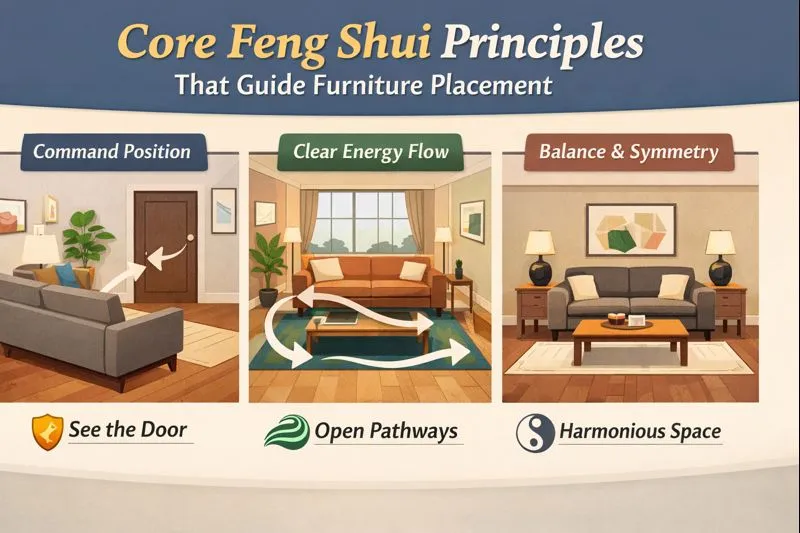
Command Position (Most Important Rule)
The command position means placing key furniture, especially the sofa, so you can see the entrance of the room without sitting directly in line with the door. This creates a subconscious sense of safety and control.
Why it matters:
- People relax more when they can see who enters
- It reduces tension and distraction
- It improves conversation flow
Clear Energy Flow (Chi)
Energy should move naturally around the room, just like people do. Furniture should never block doorways, walkways, or windows.
Modern rule of thumb:
- Leave at least 30–36 inches for main walkways
- Avoid zig-zag movement paths
Balance and Visual Weight
A well-balanced room doesn’t feel lopsided or cluttered. Large furniture pieces should be visually countered with lighting, décor, or spacing.
Balance doesn’t mean symmetry; it means harmony.
Feng Shui Living Room Furniture Placement: DO’S
Do Place the Sofa Against a Solid Wall
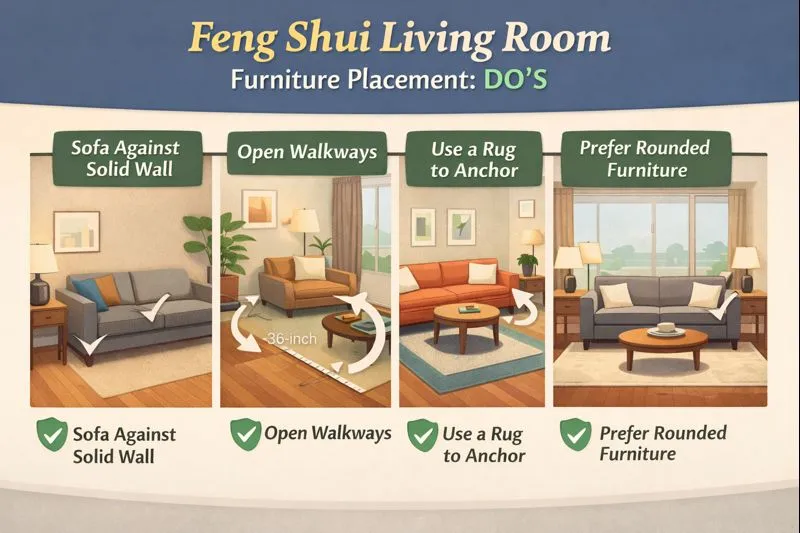
In Feng Shui, the sofa represents support. Placing it against a solid wall provides a feeling of stability and security.
If a wall isn’t available:
- Use a console table behind the sofa
- Add a tall plant or lamp to create a visual backing
Avoid placing the sofa floating without any support unless the room is very large and balanced.
Do Create Open and Clear Walkways
A living room should feel easy to move through. Furniture should guide movement, not block it.
Best practices:
- Keep pathways clear from the door to the seating area
- Avoid sharp turns around furniture
- Don’t force people to walk between tight gaps
Clear walkways improve both energy flow and daily comfort.
Do Use Furniture That Fits the Room Scale
Oversized furniture is one of the biggest Feng Shui mistakes in modern homes.
Choose furniture that:
- Matches the size of the room
- Allows breathing space between pieces
- Doesn’t dominate the layout
In 2025, designers recommend fewer but better-proportioned pieces instead of filling every corner.
Do Anchor the Space With a Rug
A rug helps ground the furniture and define the living room zone, especially in open-plan homes.
Feng Shui rug rules:
- Front legs of sofas and chairs should rest on the rug
- Avoid rugs that are too small
- Choose calming colors and simple patterns
A properly sized rug improves visual balance instantly.
Do you Prefer Rounded or Soft-Edged Furniture
Sharp corners create harsh energy. Rounded furniture promotes smoother flow and feels more inviting.
Good options:
- Round or oval coffee tables
- Soft-edged side tables
- Curved chairs or poufs
This is especially important in homes with children or tight layouts.
Feng Shui Living Room Furniture Placement: DON’TS
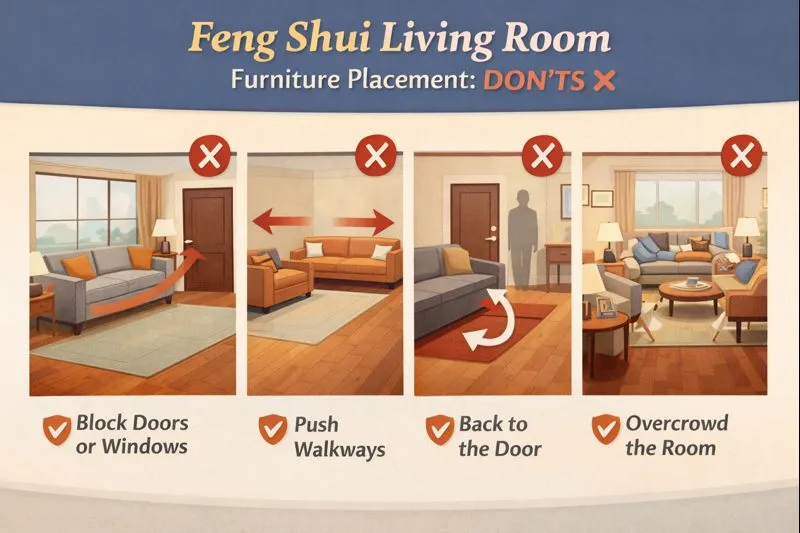
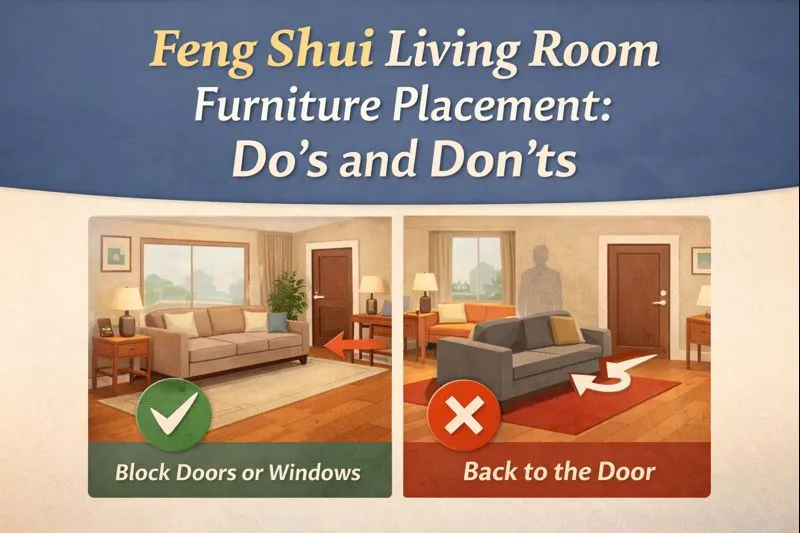
Don’t Block Doors or Windows
Blocking entrances or windows disrupts both energy flow and natural light.
Avoid:
- Sofas directly in front of windows
- Chairs blocking the door swing
- Cabinets near entry paths
Light and movement should enter freely.
Don’t Push All Furniture Against Walls
Contrary to popular belief, pushing everything against the wall doesn’t make a room feel bigger; it often makes it feel empty in the center and disconnected.
Instead:
- Float furniture slightly inward
- Create defined conversation zones
This improves flow and intimacy.
Don’t Sit With Your Back to the Door
Sitting with your back to the entrance creates subconscious tension.
If unavoidable:
- Place a mirror to reflect the doorway
- Angle seating slightly toward the entrance
This simple adjustment can dramatically improve comfort.
Don’t Overcrowd the Room
More furniture does not equal more comfort.
Signs of overcrowding:
- Hard to walk around furniture
- Too many seating options
- No visual resting space
Minimal, intentional layouts are more aligned with modern Feng Shui.
Feng Shui Living Room Furniture Placement: Do’s vs Don’ts
| Do’s (Recommended) | Don’ts (Avoid) |
|---|---|
| Place the sofa against a solid wall for support and stability | Place seating with its back directly facing the door |
| Keep walkways open and unobstructed to allow smooth energy flow | Block doors, windows, or natural light with furniture |
| Use furniture that fits the room’s scale and size | Overcrowd the living room with too much furniture |
| Anchor seating areas with a properly sized rug | Use rugs that are too small or misaligned |
| Prefer rounded or soft-edged furniture to soften energy | Use sharp-edged furniture pointing toward seating |
| Balance large furniture with lighting or décor | Push all furniture tightly against the walls |
| Arrange seating to encourage conversation and comfort | Create awkward layouts that interrupt movement |
| Maintain symmetry or visual balance where possible | Mixing too many furniture styles without cohesion |
Once you understand the do’s and don’ts of furniture placement, applying Feng Shui becomes much easier with a structured plan. If you prefer a step-by-step approach, our guide on 15 easy steps to feng shui living room arrangement walks you through simple, practical actions you can follow to improve balance and positive energy in your living room.
Feng Shui Placement for Key Living Room Furniture
Feng Shui Sofa Placement Rules
The sofa is the anchor of the living room.
Best placement:
- Against a solid wall
- Facing the entrance indirectly
- Centered within the seating arrangement
Avoid placing it:
- Directly in line with the door
- Under a beam (use lighting or décor to soften if unavoidable)
Feng Shui Coffee Table Placement
Coffee tables should:
- Sit comfortably within reach of seating
- Allow easy movement around them
- Have rounded edges when possible
Glass tables are acceptable if balanced with warm elements like rugs or wood.
Feng Shui TV Placement in Living Room
TVs represent active energy and can disrupt balance if poorly placed.
Modern Feng Shui tips:
- Avoid placing the TV as the main focal point
- Balance it with artwork or shelving
- Cover it when not in use (optional but effective)
Feng Shui Accent Chairs and Side Tables
Accent chairs should:
- Face the sofa to encourage conversation
- Be balanced on both sides if possible
Side tables help anchor seating and prevent floating furniture energy.
Feng Shui Furniture Placement for Small Living Rooms
Small living rooms benefit greatly from Feng Shui principles.
Tips for compact spaces:
- Choose multi-functional furniture
- Use vertical space wisely
- Keep layouts simple and uncluttered
- Avoid dark, bulky furniture
In apartments, good placement matters more than décor.
Common Feng Shui Furniture Placement Mistakes to Avoid
- Blocking energy flow with clutter
- Using too many furniture styles
- Ignoring corners (add plants or lamps)
- Poor lighting balance
- Oversized furniture in small rooms
Fixing these often improves a space instantly.
Modern Feng Shui Furniture Placement
Latest trends in Feng Shui-friendly interiors:
- Open-plan layouts with defined zones
- Neutral color palettes with warm accents
- Smart lighting layered at different heights
- Minimalist furniture with soft textures
Modern Feng Shui blends seamlessly with contemporary design.
Feng Shui Furniture Placement Checklist
| Item | Ideal Feng Shui Placement |
| Sofa | Against a solid wall, facing the entrance indirectly |
| Coffee Table | Rounded edges, centered within seating |
| TV | Balanced, not dominating the room |
| Walkways | Clear, open, unobstructed |
| Furniture Scale | Proportional to room size |
| Lighting | Layered and evenly distributed |
FAQs: Feng Shui Living Room Furniture Placement
According to Feng Shui, the couch should be placed against a solid wall and positioned so you can see the entrance of the living room without sitting directly in line with the door. This is known as the command position and helps create a sense of security, comfort, and stability. Avoid placing the couch with its back to the entrance or floating without visual support.
The biggest mistake in furniture placement is blocking natural movement and energy flow. This includes overcrowding the room, blocking doorways or windows, pushing all furniture against walls, or creating tight walkways. These layouts make a space feel uncomfortable, cluttered, and energetically stagnant.
The 2/3 rule for sofas means your sofa should be approximately two-thirds the length of the wall it sits against. This rule helps maintain visual balance and prevents the sofa from overwhelming the room or looking too small. It’s beneficial in modern Feng Shui and interior design for creating proportionate, harmonious layouts.
To arrange furniture according to Feng Shui:
– Place key seating in the command position
– Keep walkways open and uncluttered
– Balance large furniture with lighting or décor
– Use rugs to anchor seating areas
– Avoid sharp corners pointing toward seating
The goal is to create a layout that feels calm, welcoming, and easy to move through.
The 3-4-5 rule in interior design helps prevent visual clutter:
– 3 colors in a room (primary, secondary, accent)
– 4 main furniture pieces
– 5 decorative accents
This rule aligns well with Feng Shui principles, as it promotes balance, simplicity, and visual harmony, particularly in living rooms and small spaces
Conclusion: Small Furniture Changes, Big Energy Shift
You don’t need a full renovation to improve your living room. By following Feng Shui living room furniture placement do’s and don’ts, you can transform how your space feels, often in just one afternoon.
Focus on:
- Clear flow
- Balanced layouts
- Comfortable seating
- Intentional placement
These principles create a living room that feels calmer, more inviting, and naturally balanced.